
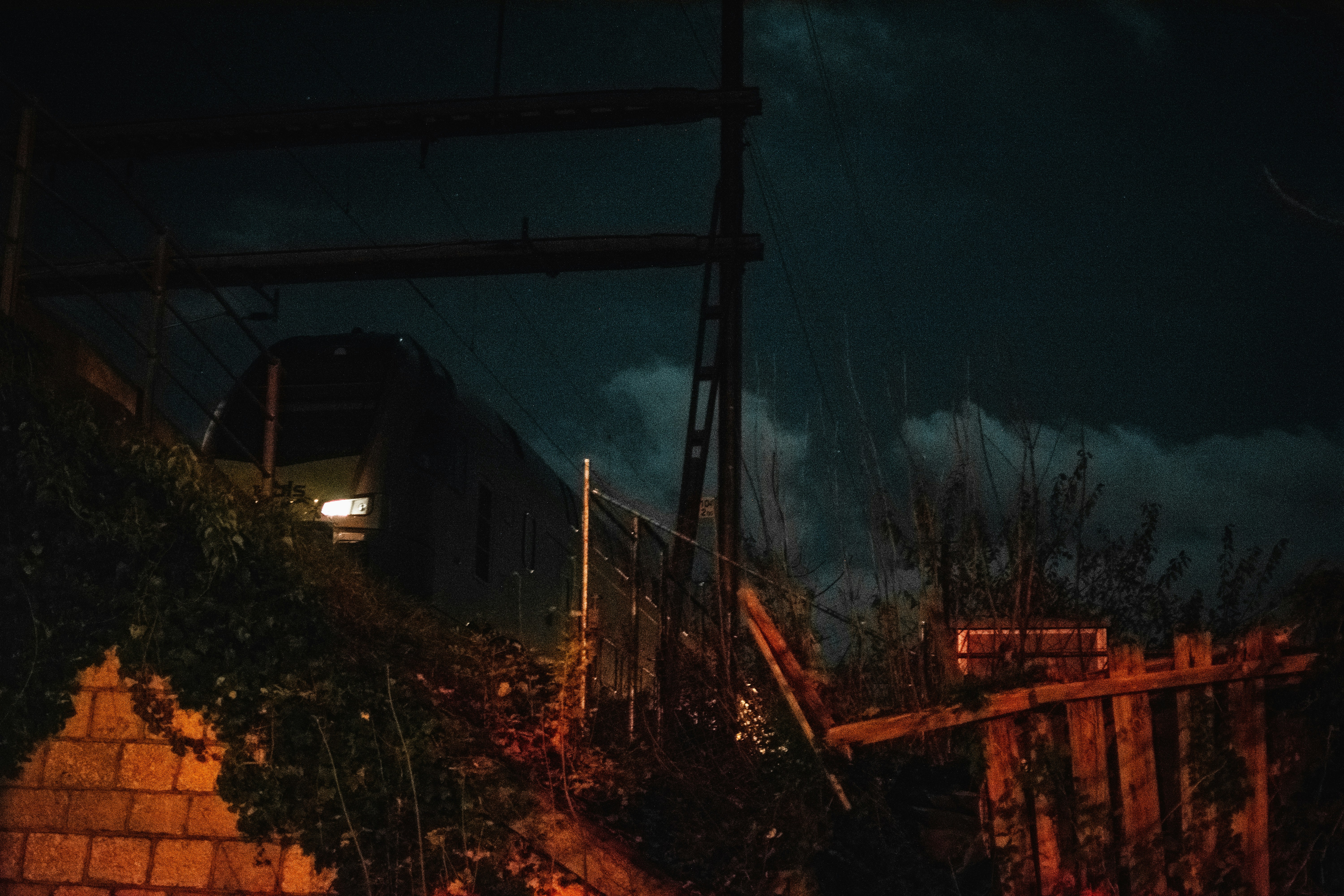
The Arrival of the Midnight Train
As the clock strikes midnight, a low rumble echoes through the stillness of the night, signaling the arrival of the Midnight Train. This enigmatic locomotive, shrouded in mystery, embodies both the fantastical and the hauntingly familiar. It appears as if summoned by the secrets buried deep within the souls of those who await its arrival, suspended between dreams and reality. With its steam swirling like whispers in the dark, the train beckons passengers from the shadows, each carrying a weight of unspoken regrets and yearnings.
On the platform, a diverse group of individuals stands in quiet anticipation, their expressions revealing a tapestry of emotions intertwined with their distinct backgrounds. Among them is a solitary writer, burdened with the ghosts of past relationships, clutching pen and paper as if searching for inspiration in the train's mystique. Nearby, an elderly woman, whose face is etched with the lines of a life fully lived, gazes longingly at the train, haunted by memories of love lost and chances never taken. A young man, his hands stuffed into the pockets of a worn-out jacket, stands still, torn between the familiar world he knows and the uncertainty of the journey ahead.
Each passenger is drawn to the Midnight Train for personal reasons—some seek closure, while others are simply in search of an escape from their realities. The air is thick with a sense of anticipation, laced with both excitement and trepidation. As the train doors glide open with an ethereal creak, the inviting glow of its interior spills onto the platform, illuminating the faces of those standing before it. The Midnight Train is not merely a mode of transportation but a vessel of transformation that promises to take its passengers on a journey through their deepest regrets and desires.
Meet the Passengers
The Midnight Train is no ordinary mode of transport; it serves as a vessel for souls burdened by regret. Each passenger embodies a unique tale of past decisions, casting shadows on their present lives. Among them is Alex, a former corporate executive who sacrificed familial bonds for career advancement. In his climb to the top, he overlooked the importance of nurturing his relationship with his teenage son, a move that ultimately cost him his family. As he rides the train, Alex reflects on missed soccer games and missed opportunities for connection, contemplating whether he can ever rectify the discord he created.
Traveling with Alex is Maria, an artist who once cherished her passion for painting. However, after a series of failures at galleries, she allowed doubt to consume her aspirations. The train's rhythmic motion urges her to face her insecurities, raising the haunting question: will she ever paint again? The remnants of self-doubt starkly clash with the vibrant hues she once adored, leading her into deep contemplation of her choices and their effects on her identity.
Lastly, we encounter David, a war veteran grappling with the aftermath of his service. Haunted by the atrocities he witnessed, he carries an insurmountable weight of guilt over his role in conflict. The train offers him a temporary escape but also a chance to confront the emotions he has buried. The convergence of these three characters aboard the Midnight Train creates a complex tapestry of shared regrets and individual stories. As their paths intertwine, they might find solace in their mutual understanding of past mistakes, allowing for personal growth during their journey.
The Journey Begins: The Train's Mystique
As twilight descends upon the landscape, the midnight train departs from the quiet, flickering lights of the station. This is no ordinary train; its exterior gleams with an ethereal sheen, illuminated by soft, flickering lanterns that whisper tales of yesteryears. Once aboard, passengers are greeted by an atmosphere imbued with both intrigue and solemnity. The interior, adorned with plush velvet seats, deep mahogany paneling, and vintage decor, transports travelers to a bygone era, merging nostalgia with enigma.
Amidst the rhythmic clatter of wheels against the tracks, a surreal landscape begins to unfold outside the train windows. As the train glides through an intricate tapestry of misty valleys, jagged mountains, and meandering rivers, the world outside transforms into a dreamscape—a hauntingly beautiful panorama where shadows intermingle with flickers of light. Occasional glimpses of phenomena such as luminescent flora and fleeting apparitions seem to challenge the passengers’ perceptions of reality.
However, as the miles accumulate, a different energy fills the carriage. The surreal ambiance brings latent emotions to the surface, compelling passengers to reflect on their past. Whispers of regret begin to weave through the conversations; lost opportunities and unspoken words echo in the silence. Each traveler is drawn into their own reverie, directly influenced by the train's otherworldly environment. With each rhythmic pulse of movement, reflections of their choices grow louder, shaping the atmosphere with an almost tangible weight.
This is more than a mere journey; it’s a voyage into the inner sanctum of their regrets, igniting contemplative dialogues among passengers. As the train presses onward into the unknown, the feeling of melancholy intertwines with the train’s mystique, propelling everyone toward their personal revelations and the healing that awaits in the shadows of regret.
Confronting Regrets: First Encounters
As the Midnight Train glides through the night, each passenger finds themselves facing the specters of their past decisions. The train has a reputation for presenting momentous opportunities for reflection, allowing individuals to confront their buried regrets. The atmosphere inside the carriage shifts dramatically, as the ticking sound of the clock amplifies their anxiety, guiding their thoughts towards experiences they would much prefer to forget.
One passenger, a middle-aged woman named Clara, recalls her decision to end a long-term friendship out of pride. The train, sensing her unresolved emotions, conjures a vivid scene from years ago—her friend’s tear-streaked face as Clara walked away, unyielding and indifferent. Clara is overwhelmed by the sudden flood of remorse, realizing that in choosing pride, she severed a bond that had shaped her youth. This encounter forces her to re-evaluate her motivations, as she processes the emotional toll her decision has exacted over the years.
Similarly, a young man named Alex grapples with his choice to abandon his dreams of becoming a musician in pursuit of a more conventional career path. The train manifests a fantastical stage, echoing with the cheers of an imagined audience, where Alex visualizes himself performing passionately. The stark contrast between this vivid dream and the reality of his current life ignites a poignant conflict within him. Underneath the glittering lights of what-could-have-been, he confronts a devastating truth: his fear of failure led him to forsake his true aspirations.
As these revelations unfold, the Midnight Train acts as a conduit for catharsis. Each scenario serves not only to challenge the passengers' past choices but also to illuminate the underlying emotions that tether them to regret. The train encourages dialogue with themselves, demanding that they explore the intricacies of their decisions, and confront the effects those choices have had on their lives. Through this process, the passengers begin to pave the road toward acceptance—acknowledging their regrets while simultaneously seeking to learn and grow from them.
As the midnight train rolls on through the quiet landscape, it becomes a unique sanctuary for the passengers aboard. Trapped in the cocoon of darkness and the rhythmic clattering of wheels, they find solace in unexpected connection. The initial hesitance that often characterizes strangers gradually melts away, leading to enlightening exchanges that foster a deep sense of camaraderie.
Engagements begin with hesitant smiles and tentative conversations. It doesn't take long for these fleeting interactions to evolve into heartfelt discussions around shared experiences of regret and longing. Each passenger carries their individual burden—a lost opportunity, a failed relationship, or a personal setback. As words flow, these regrets transform into threads weaving together their differing life stories. Vulnerability becomes the common currency exchanged, nurturing empathy and understanding among them.
Adrian, a once-aspiring musician, shares his tale of abandoning his dreams for a stable job. In a heartfelt moment, he expresses his longing for the freedom music brings, resonating deeply with Ella, an artist who faced similar choices. They soon realize that they encapsulate the universal struggle of choosing practicality over passion, which opens the door to intense vulnerability. Other passengers, joining in, recount their past decisions that haunt them, each account met with nods of comprehension and shared tears.
This atmosphere of openness cultivates an unspoken promise—the assurance that judgment is suspended within the confines of this train. Passengers become active listeners, and their connections deepen, facilitating not only individual reflection but also collective growth. They inspire each other to view their regrets as intricate parts of their personal narratives rather than mere failures. Amidst the dim light of the train, barriers dissolve and friendships bloom, defining a remarkable journey through regret and self-discovery.
Turning Points: Lessons from the Past
The journey aboard the Midnight Train serves as a profound metaphor for reflecting on mortality and the regrets that accompany our life choices. Each passenger's story reveals critical turning points that lead them to confront their past. This confrontation often catalyzes a deeper understanding of the consequences of their actions and the weight of their missed opportunities. These moments illuminate how reflecting on one's regrets can lead to significant personal transformation.
Throughout the journey, the passengers share their tales of what could have been. For instance, a former artist mourns the abandonment of her dreams, realizing that her choice to prioritize financial security over passion cost her not only her happiness but also her identity. This turning point compels her to recognize the importance of following one's true calling, igniting a spark of determination within her to reclaim her artistry, albeit in the twilight of her life.
Another traveler, burdened by the regret of lost relationships, confronts how his choices affected those closest to him. His realizations lead to a pivotal moment of vulnerability as he reaches out to an estranged sibling. This act of reconciliation demonstrates how acknowledging one's past mistakes can lead to healing and restoration, both for oneself and for others.
Through these poignant encounters, the passengers learn that every regret carries a lesson. By embracing the painful recollections of their past, they begin to understand that acceptance is a critical component of personal growth. The choices made in the past do not define the future; rather, they shape the path towards a more enlightened existence. Hence, the Midnight Train becomes a vessel of transformation, guiding its passengers to appreciate the profound importance of recognizing and learning from their life’s turning points.
A Glimpse of Redemption
The journey of the Midnight Train is not solely defined by the weight of regret; within the shadows of remorse, glimmers of redemption emerge. Each passenger, with their unique burdens, experiences transformative moments that illuminate paths toward reconciliation and hope. Redemption can manifest in various forms, offering opportunities for acceptance, forgiveness, and a renewed sense of purpose.
Take, for instance, the elderly gentleman who sits quietly among the other travelers. Burdened by the memory of a fractured relationship with his daughter, he spends most of his time gazing out of the window. However, as the train glides through the darkness, he finds the courage to draft a heartfelt letter of apology. In this act, he not only acknowledges the past but also takes the first step toward healing their estranged bond.
Similarly, a young woman carries the weight of a career opportunity lost due to a misjudgment made years ago. As she converses with a fellow passenger, she begins to share her tale of regret. Through this dialogue, she discovers that embracing her mistakes can drive her to pursue her passions anew. By planning her next steps, she resolves to channel her past experiences into a motivational campaign aimed at helping others avoid similar pitfalls.
Another passenger, a middle-aged man grappling with his history of addiction, learns the value of vulnerability. By engaging in a candid discussion with a support group aboard the train, he recognizes the power of seeking help and the importance of community. This moment of connection becomes a catalyst for change, reinforcing his commitment to reclaiming his life.
These glimpses of redemption reflect the duality of the human experience, where regret coexists with the potential for growth. As each passenger navigates their journey aboard the Midnight Train, they confront their past while simultaneously forging a path toward a brighter future, emphasizing that while mistakes may linger, there is always a chance for redemption.
The Train's Destination: A New Chapter
As the midnight train hurtles down the tracks, one can imagine the passengers on board reflecting on the transformative journey they are experiencing. The final destination, representing the beginning of a new chapter, looms on the horizon, and with each passing moment, the passengers are gradually shedding the weight of their pasts. Regret often acts as an anchor, tethering individuals to their previous decisions and experiences. However, the environment within the train offers a unique cocoon of reflection and introspection.
Throughout the journey, words of wisdom are exchanged among fellow travelers. Conversations that begin with hesitation evolve into profound dialogues, as the collective sharing of stories allows individuals to confront their regrets. It's here, in the warmth of shared human experiences, that they realize that everyone carries their own burdens. This understanding helps to light the path to self-forgiveness and acceptance.
As the train approaches its destination, a palpable shift occurs among the passengers. The once heavy atmosphere filled with remorse is gradually replaced by a sense of hope and renewal. Each individual, armed with the lessons learned from their past, feels empowered to step off the train ready to embrace their futures. The train's journey serves as a metaphor for life itself—there are moments of darkness, misgivings, and stumbles along the way, but these experiences can lead to profound personal growth.
With the train’s wheels slowing and the final station in sight, the passengers are not just arriving at a place; they are reaching a pivotal moment of transformation. They carry forward the knowledge gained from the regrets which haunted them on their travels. The train serves as a reminder that, though paths may have diverged, new beginnings are always possible. By acknowledging their past, they are prepared to embrace the future with open hearts and open minds, turning their regrets into stepping stones as they embark on the next chapter of their lives.
Epilogue: The Impact of the Journey
The journey undertaken on the midnight train serves as a profound metaphor for the personal growth achieved by its passengers. Each individual faced unique struggles and regrets, yet the collective experience of traversing through the darkness of their past illuminated pathways toward healing and understanding. The train ride, which began in an atmosphere of uncertainty, culminated in revelations that have lasting implications beyond the railroad tracks.
Throughout this journey, passengers learned the vital importance of confronting their regrets head-on. By sharing their fears and vulnerabilities with one another, they dismantled the walls of solitude and shame that had previously dictated their lives. This communal aspect of the experience fostered empathy and connectedness, allowing individuals to realize that their struggles were not isolated incidents but rather shared human experiences. The transformations in their perspectives empowered them to view regrets as opportunities for growth rather than sources of despair.
In the aftermath of this journey, the impact resonates strongly in the lives of the passengers. Many report a newfound sense of clarity and purpose as they navigate their daily experiences. The lessons learned about acknowledging and addressing regrets are now cornerstones of their personal development. This journey has emboldened them to make informed decisions that align with their true values, subsequently enriching their relationships and fostering deeper connections with those around them. Some even take action by mentoring others facing similar challenges, planting seeds of hope and resilience.
The midnight train journey becomes not just a passage through physical landscapes but an odyssey toward emotional and psychological freedom, reminding individuals that confronting one’s past is essential for a fulfilled existence.