
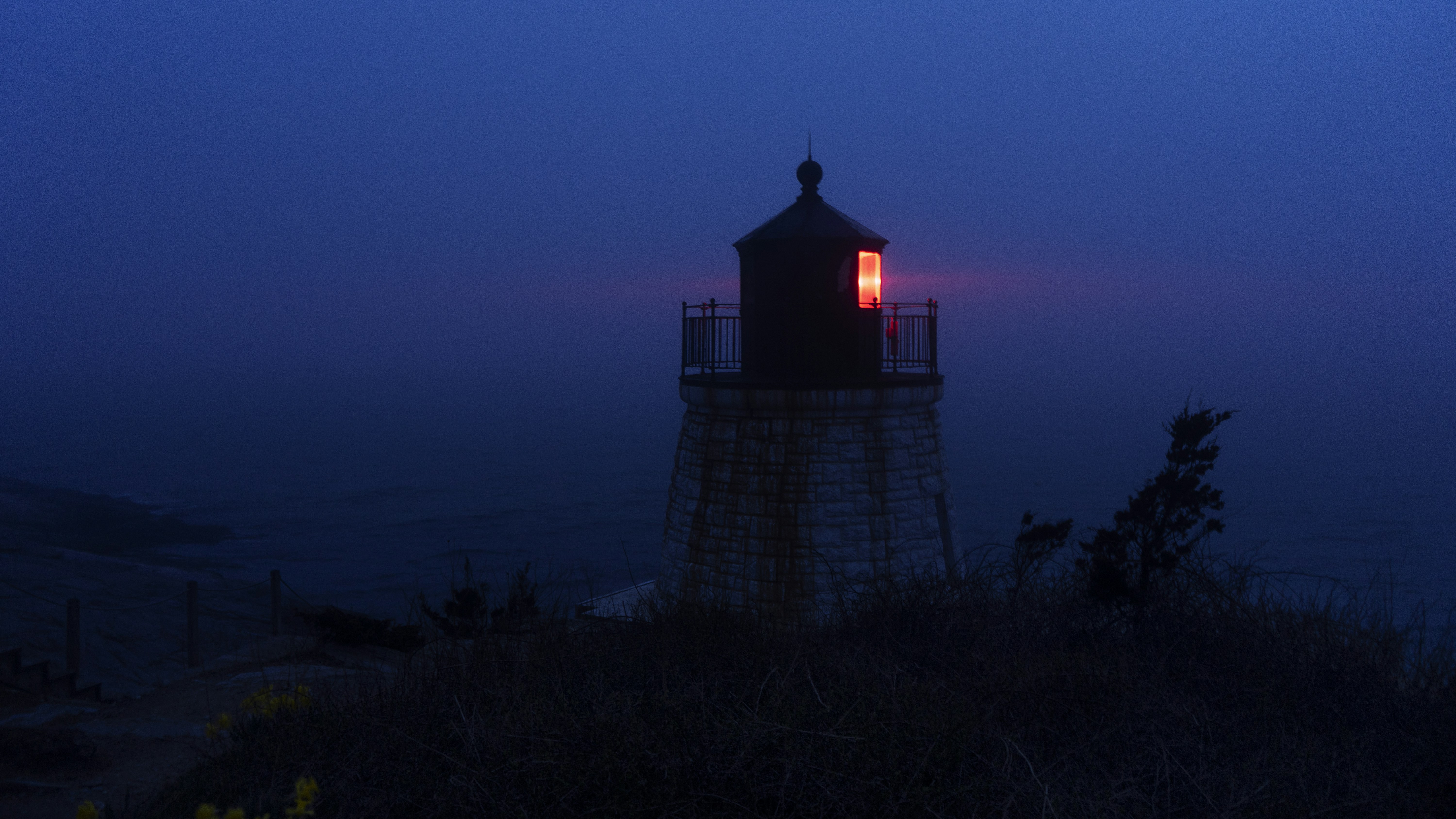
The Silent Lighthouse
Nestled between rugged cliffs and the relentless embrace of rolling waves lies the quaint coastal town of Eldermere. This small hamlet, with its charming cottages and friendly populace, tells tales of generations marked by the sea's ebbs and flows. Yet, at the heart of the town stands a solitary figure, the elderly lighthouse, a structure that has been shrouded in mystery and darkness for decades. The lighthouse, once a beacon guiding sailors safely to harbor, now looms ominously, casting long shadows across the cobbled streets, and crucially, dominates the town's landscape.
Once vibrant with the flashes of its guiding light, the lighthouse fell silent many years ago. It has remained unlit since the day it was decommissioned, leaving the locals to wonder what may have transpired within its weather-beaten walls. The structure, although dilapidated, continues to draw the interest of tourists and locals alike, serving as a poignant symbol of Eldermere's rich maritime history. Rumors and local legends have since grown, each adding layers to the lighthouse lore; stories are passed down like heirlooms, whispering of ghostly apparitions and hidden treasures beneath the ground.
The town's atmosphere reflects this haunting silence; the air is thick with nostalgia, and a sense of loss permeates the bustling harborside market. Children are cautioned against venturing too close to the lighthouse while adults freely share tales, always with a tinge of reverence and fear. This abandonment has transformed the lighthouse into a canvas upon which the community's stories are painted, each more captivating than the last. Eldermere's identity is subtly entwined with the narrative of its lighthouse, a silent witness to the passage of time—a vessel of secrets yearning to be unveiled.
The Mysterious Reawakening
On a seemingly ordinary evening, the lighthouse, a long-dormant sentinel of the coast, began to flicker back to life, casting its dazzling beam across the starlit waters. It had been years since the light last graced the skies, leaving the townsfolk accustomed to the tranquility of the night, devoid of its guiding presence. As the light pierced through the dark, initial reactions varied from disbelief to a tinge of nostalgia, rekindling memories of warnings it had once shared.
Curiosity swiftly transformed into concern as the townspeople gathered at the shoreline, gazing up at the beacon with uncertain eyes. Whispers slithered through the crowd about the light's uncanny ability to foretell disasters. Young and old alike exchanged tales of how, in the past, the lighthouse had flashed ominously before storms rolled in or shipwrecks occurred. The reawakening of such a haunting relic stirred both fear and intrigue among the locals; some embraced the light as a protective omen, while others viewed it as an eerie harbinger.
Speculation began to swirl about the circumstances surrounding the light’s sudden return. Was it merely an electrical anomaly, or was there something more supernatural at play? The local newspaper soon issued a call for stories, encouraging townsfolk to share their encounters with the lighthouse, further stirring the pot of local legend. As the days passed, sightings of strange activities near the lighthouse started to appear, leading people to wonder whether the structure had reclaimed its ancient sentience.
The enigmatic phenomena only deepened the urgency for answers. Perhaps the lighthouse was more than a mere building; it could symbolize a connection to the past, a forewarning of future events, or even a bridge between realms. Whatever the case, its luminous resurgence heralded a veil of mystery enveloping the coastal town, one that would beckon the curious into an unfolding saga.
Meet the Young Journalist
The protagonist of our story is a young journalist named Clara Hammond, whose innate curiosity and determination set her apart in the bustling world of news and media. Clara, having grown up in the quaint coastal town of Marewood, has always felt a deep connection to its rich history and the enigmatic lighthouse that towers over the cliffs. The lighthouse, standing sentinel against the waves, serves as a symbol of safety and guidance, yet its recent peculiar behavior has piqued Clara's interest and prompted an investigation.
Clara holds a degree in journalism from a prestigious university and has returned to Marewood after a brief stint in a city newsroom. She felt compelled to return to her roots, especially when the news of the lighthouse's strange activity began to spread throughout the community. Whispers of unusual light patterns and ghostly apparitions fuel her desire to uncover the truth. Clara is motivated by more than just a story; she is driven by a personal connection to the lighthouse, as it was the centerpiece of her childhood adventures and a source of inspiration for her aspirations of becoming a journalist.
As Clara embarks on her investigation, she embraces both the challenges and the benefits of her connection to the town. This relationship provides her with invaluable insights into the community's folklore, vast knowledge of local history, and unique access to oral testimonies from the residents. However, it also imposes expectations, as some are skeptical of her intentions and worried that her probing might unearth stories best left buried. Armed with her notepad, camera, and sense of purpose, Clara pries into the mystery surrounding the lighthouse, seeking to illuminate the truth and perhaps discover more about herself in the process.
Investigating the Signal Patterns
As the mystery of the lighthouse deepened, the journalist took upon herself the challenging task of decoding the enigmatic signals emitted from the towering structure. This endeavor was not merely a pursuit of curiosity; it was an essential step aimed at uncovering connections between these signals and historical maritime disasters that have struck the coastal town over the years. Her initial step involved a thorough examination of the lighthouse's signal patterns, meticulously documenting their frequency and timing.
Leveraging a rich repository of maritime data, the journalist conducted a rigorous analysis of past disasters that coincided with the lighthouse's signals. She scrutinized records of shipwrecks, navigational hazards, and weather conditions, attempting to identify a correlation between the lighthouse warnings and the tragic events at sea. This research process was extensive, requiring collaboration with local historians, maritime experts, and weather analysts to piece together an intricate puzzle.
The community, deeply affected by these historical maritime incidents, has always regarded the lighthouse as both a beacon of hope and a harbinger of disaster. The journalist's investigation provided an opportunity for the residents to reflect on their maritime heritage, provoking discussions about safety, vigilance, and the necessity of understanding the environmental conditions that once led to dire consequences.
As she delved deeper into the lighthouse's signal patterns, the journalist's findings revealed not just a potential warning system but also a vital link to the town's collective memory. Parallels drawn between the signals and notable tragedies served to reinforce the notion that vigilance is essential, both at sea and within the community. In light of these revelations, the residents grew increasingly invested in the ongoing investigation, united by a shared commitment to decipher the messages from their lighthouse, a sentinel of the past whose secrets were yet to be fully uncovered.
Unraveling the Lighthouse Keeper's Past
The story of the lighthouse keeper is woven intricately into the very fabric of the coastal town. John Whitmore, who took on the role of keeper in the early 1900s, became emblematic of the beacon that guided myriad ships safely through tumultuous waters. His formidable presence and dedication were noted by locals, but few understood the darker shadows lurking behind his steadfast demeanor.
John’s journey began on the rugged shores of this coastal community, where he faced the loss of his family to a tragic shipwreck early in his life. It is believed that this event profoundly affected his relationship with the sea and fueled a burning desire to prevent similar tragedies from occurring. His decision to become the lighthouse keeper was not only a profession; it was also a means of redemption, a pathway to honor his family’s memory by ensuring the safety of others.
As the decades passed, whispers of his interactions with ship captains and tales of odd occurrences began to circulate among townsfolk. He developed a reputation for receiving cryptic messages during thunderstorms, leading some to speculate about his potential connections to the supernatural. Mysterious disappearances of sailors in the area further complicated his legacy, giving rise to the idea that John might have been guarding secrets far more significant than anyone could fathom.
His later years were marked by solitude, as the lighthouse became his only companion. After his passing, the lighthouse was automated, and his past was largely forgotten. However, recent interest in local history has begun to peel back layers of secrecy, prompting the discovery of letters and journals that reveal John Whitmore as a complex figure, shaped by both tragedy and his devotion to the lighthouse's enduring legacy.
Suspense Builds: The Upcoming Disaster
As the signals from the lighthouse intensified in urgency, a palpable sense of dread enveloped the coastal town. The once peaceful community began to unravel, unable to ignore the ominous warnings transmitted through the light beams. Local fishermen, normally confident in their navigational skills, hesitated to venture out to sea, while families packed their belongings, driven by nowhere but fear and uncertainty. The journalist, who had unwittingly stumbled upon the connection between the lighthouse signals and a predicted disaster, found themselves at the eye of this impending storm.
The townspeople were in a frantic state, a phenomenon often dubbed "lighthouse panic". This situation brought confusion, as residents clamored to interpret the vague and cryptic signals that illuminated the night sky. Many believed that an impending natural disaster loomed, perhaps a devastating storm or an unexpected tidal wave. The journalist felt the weight of responsibility, understanding that their revelations could shape the town's response to the threat. Every evening, as darkness fell, the flickers of the lighthouse transformed into harbingers of doom, underscoring the urgency of the matter.
Undoubtedly, the pressure mounted on the journalist to clarify what was known and to discern fact from speculation. They navigated through a maze of conflicting rumors and superstitious beliefs, desperately seeking reliable sources among the townspeople. Some sought solace in denial, while others positioned themselves as experts on lighthouse lore. Each passing day reinforced the tension, as the journalist worked desperately to uncover the truth behind the signals and the disaster they hinted at.
As the deadline approached and the lighthouse continued its relentless warnings, the stakes intensified, leading to confrontations among residents. Will the journalist unveil the alarming truths in time to help the townspeople prepare for the disaster? As the answers lingered just out of reach, the impending chaos tightened its grip on the entire coastal town.
Confronting the Truth
The investigation concerning the mysterious occurrences surrounding the coastal town’s lighthouse took a pivotal turn when journalist Elise Carter stumbled upon a series of old photographs belonging to the lighthouse keeper, Thomas Avery. These photographs were hidden away in the town’s archives but held a treasure trove of information that could potentially unravel the enigma enveloping the lighthouse and its keeper. Each image depicted tales of hardship and resilience, revealing a past that many had chosen to forget.
As Elise meticulously examined the photographs, she noticed a particular image wherein Thomas was seen alongside several local fishermen. Their expressions were somber, hinting at a shared burden that was never spoken of openly within the community. With a growing sense of urgency, she cross-referenced Thomas’s life with interviews from local residents, allowing her to piece together an uncomfortable narrative that connected his past traumas to the unsettling events presently unfolding.
It became increasingly clear that the lighthouse, a beacon once associated with safety and guidance, may be harboring a deeper and darker significance. Local accounts began to echo long-buried fears; whispers of tragedies tied to the sea and its depths started to surface. Elise’s revelation forced the community to confront the idea that their lighthouse was not merely a tourist attraction but rather a witness to profound human loss and despair. The understanding of Thomas as merely a solitary figure behind the lamp changed dramatically. Instead, he emerged as a man burdened by guilt from events long past, events that might have manifested as the strange phenomena now plaguing the town.
This shocking connection between the lighthouse keeper’s past and the current mysterious phenomenon profoundly affected the community’s perception. They were compelled to reassess their understanding of both the lighthouse and its keeper, revealing layers of complexity about human emotions and histories intertwined with their coastal identity.
The Unexpected Twist
The narrative surrounding the coastal lighthouse begins as a tale steeped in intrigue and mystery; however, it takes an unforeseen turn that challenges both the journalist and the reader's perceptions. Initially, the journalist was drawn to the enigmatic predictions generated by the lighthouse’s beacon—predictions that ostensibly foretold both calamities and fortunes for the town's inhabitants. The journalist's quest was clear: to unravel the forest of uncertainties that surrounded the light and its proclamations. However, as the investigation deepened, a twist emerged that complicated the seemingly linear storyline.
As the journalist delved into the town's history and spoke to the locals, it became increasingly apparent that the beacon's predictions were not mere omens but rather reflections of the community's consciousness. The twist revealed that the lighthouse was not a solitary source of truth but rather a mirror of the town's collective hopes and fears. Each prediction was arriving not from some external force but rather shaped by the beliefs and sentiments of those who sought solace in the light. This realization forced the journalist to confront their own biases, questioning whether the story they were pursuing was indeed grounded in objective truth or influenced by their preconceived notions of the town and its people.
This unexpected twist in the narrative prompted the journalist to reconsider not only their motives but also the implications of their reporting. Were they amplifying the fears and hopes of the town, or were they illuminating the truths buried beneath layers of folklore? Such questions added a layer of complexity to their mission, transforming the act of journalism from merely chronicling events to engaging actively with the emotional undercurrents of the community. The lighthouse, therefore, became a significant player in the story’s evolution, illustrating how unsuspected variables can reshape narratives and challenge perceptions in the world of investigative journalism.
Conclusion: Legacy of the Lighthouse
The reawakening of the lighthouse in the coastal town symbolizes not just the restoration of a physical structure but also the revival of hope within the community. For years, the lighthouse stood as a mere relic, a faded reminder of better times when the town thrived on its maritime heritage. Its illumination during the recent storm not only guided ships safely to harbor but also reignited a sense of pride among the townsfolk who had felt overshadowed by past misfortunes. The emotional impact of this resurgence extends beyond navigation; it serves as a beacon of unity and resilience for local residents.
For the protagonist, the journey to uncover the lighthouse’s mysteries has been transformative. Through this process, significant lessons emerged about trust—not just in others but in oneself. As relationships were tested, the protagonist learned that confronting one's fears and embracing vulnerability can lead to stronger bonds with the community. The lighthouse, once feared for its association with loss, now represents a renewed commitment to collective well-being, illustrating that with trust, even the heaviest burdens can be lifted.
Moreover, the narrative around the lighthouse encapsulates the delicate balance between fear and hope. Residents, once reluctant to acknowledge the town’s past, have found closure in embracing their history, learning that memories, no matter how painful, are vital for growth. This journey teaches that while fear can be paralyzing, hope can be a powerful catalyst for healing and development. Ultimately, as the lighthouse shines its light anew, the coastal town stands ready to embrace a future filled with possibilities, grounded in the lessons drawn from both its history and the bonds formed in adversity.